
Cockroach Extermination Services
Cockroach problems do not go away on their own. If you are seeing one roach, there are usually many more hiding behind walls, appliances, and cabinets. Cockroaches spread bacteria, contaminate food, and trigger allergies, which makes fast and proper cockroach control important for your home or business.
Liberty Pest Services provides professional cockroach control that targets the source of the infestation, not just the roaches you see. We inspect high-risk areas, identify the species, and use proven treatment methods to eliminate active roaches and prevent them from coming back. Our approach focuses on long-term results, not quick sprays that only offer temporary relief.
Whether you are dealing with roaches in the kitchen, bathrooms, or commercial spaces, our residential and commercial cockroach extermination services are designed to be effective and safe. If cockroaches have taken over your space, Liberty Pest Services is ready to help restore a clean, roach-free environment.
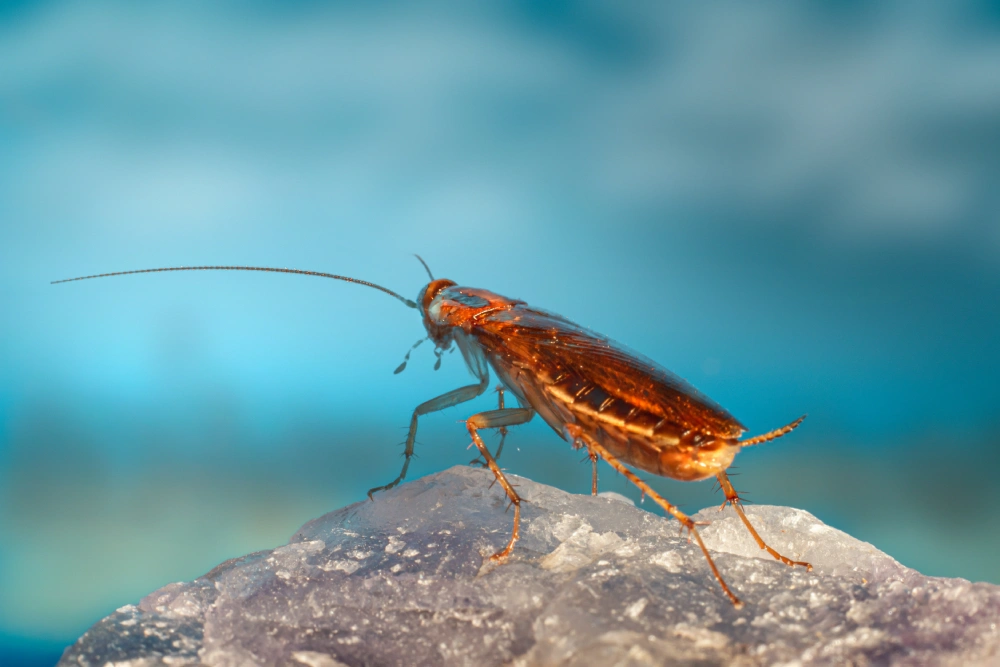
The Types of Cockroaches you might have in Alameda And Contra Costa County
The East Bay is home to several types of cockroaches that commonly invade homes and businesses. In our local area, the most common cockroach species include German cockroaches, American cockroaches, Oriental cockroaches, Field cockroaches, and Turkestan cockroaches. Each of these pests behaves differently and requires a specific approach for effective cockroach control.
Below are key details about each cockroach species commonly found in the East Bay, helping homeowners and property managers better understand what they are dealing with and why professional cockroach extermination is often necessary.
German Cockroach
American Cockroach
Oriental Cockroach
Field Cockroach
- Field cockroaches are most commonly found outdoors in yards, gardens, leaf litter, and mulch, rather than living indoors like German cockroaches.
- They are often attracted to lights at night and may wander inside through doors, windows, or garages, especially during warm months.
- Field cockroaches do not reproduce well indoors, so seeing them inside usually means they are coming from an outdoor source nearby.
- They are usually dark brown to black in color and can be mistaken for German cockroach species, which is why proper identification is important for effective control
Top Three Cockroaches You Might Be Seeing
German Cockroach
Description
The most common indoor cockroach species in California. Prefers warm, humid areas close to food, water, and dark harborage. It can contaminate food and utensils, destroy fabric and paper products, and spread diseases such as Staphylococcus, Streptococcus, hepatitis virus, and coliform bacteria. Females can produce over 30,000 new cockroaches each year, leading to large infestations. Nocturnal species, so seeing them during the day indicates an infestation.
Physical Characteristics
Small in size, typically ranging from 1/2 to 5/8 inch in length. Light brown or tan in color, with two dark parallel stripes running lengthwise on their pronotum behind their head.
Habitat and Behavior
Commonly found in warm, humid environments such as kitchens, bathrooms, and food storage areas. Nocturnal and often found hiding in dark, secluded areas during the day, such as cracks and crevices, behind and under appliances, and in cabinets and drawers.
Reproduction and Infestation
Reproduce quickly, with a single female producing several generations in a year. Infestations can occur rapidly due to their ability to hitchhike into buildings through infested items, packaging or by traveling from neighboring infested areas.
Health Concerns
Known to carry pathogens and can contaminate food and food preparation surfaces, posing a risk of spreading diseases such as salmonella and gastroenteritis. It can also trigger asthma and allergies in some people due to the allergens present in their feces, shed skin, and saliva.
Control
Control and elimination typically involve a combination of sanitation, exclusion measures, and the use of insecticides and baits. Professional pest control services are often sought for effective management, especially in severe cases.
Oriental Cockroach
Description
Often found in cool, dark, and damp places, such as garages, basements, and around water meter boxes. Unable to climb smooth vertical surfaces, making it commonly found in bathtubs or sink drains. Black to dark brown in appearance and slightly over an inch in length.
Physical Characteristics
Typically dark brown or black in color with a shiny appearance. They are larger than German cockroaches, with adult females reaching about 1 inch in length.
Habitat and Behavior
Prefer dark, damp, and cool environments, often found in basements, crawl spaces, sewers, and other damp areas. Less agile and more sluggish compared to other cockroach species, often associated with decaying organic matter and filth.
Reproduction and Infestation
Have a relatively long life cycle and can produce a strong, musty odor. Infestations often occur in areas with poor sanitation, excessive moisture, and organic debris.
Health Concerns
Can transmit disease-causing organisms and contaminate food and food preparation surfaces with bacteria and pathogens. Presence can exacerbate allergies and asthma in some individuals due to allergens in their feces, shed skins, and saliva.
Control
Involves addressing underlying sanitation and moisture issues, sealing entry points, and implementing insecticide treatments where necessary. Proper ventilation, dehumidification, and removal of organic debris can help reduce favorable conditions for their survival and reproduction.
Field Cockroach (Vaga Roach)
Description
Primarily an outdoor species, and when found indoors, it is considered an occasional invader that typically does not establish residence indoors. Known as Blattella vaga.
Physical Characteristics
Slightly smaller than German cockroaches with a more brownish-gray color. Distinguished from German cockroaches by a black area between the eyes on the front of the head, whereas the German cockroach has a tan-colored area in the same location. Nymphs of field cockroaches also have the black face characteristic.
Habitat
Primarily outdoor pests attracted to lights. It is known to fly readily and is found in a wide range from Texas to the West Coast and north through California.
Reproduction
Female field cockroaches produce egg capsules with an average of around 30 eggs, and the interval from egg to adult is approximately three months.
Control and Prevention
Mainly relies on reducing harborage sites around structures and applying perimeter treatments with residual insecticide and granular baits to reduce their populations. Indoor treatments are typically not necessary unless large numbers have managed to find their way inside.
Protect Your Home
Get in touch with Liberty Pest Services. We provide professional Cockroach control in Antioch, Brentwood, Oakley, Pittsburg, San Leandro, San Lorenzo, and the surrounding East Bay areas!